
Free subject : Tchernobyl
- Victo N

- 12 juin 2019
- 2 min de lecture
During this Erasmus, I had the opportunity to travel to different countries such as Latvia, Poland... and Ukraine. Ukraine is an Eastern European country bordering Russia and currently in conflict with it.


For my free article I chose to talk about this country and more precisely about the nuclear disaster of Chernobyl because this story fascinated me enormously, interested me and because I had the chance to walk around and visit this iconic place.
The story :
On April 26, 1986, at 1:23 a.m., reactor No. 4 at the Chernoby nuclear power plant exploded. The accident was caused by the uncontrolled increase in power in reactor No. 4 leading to core fusion. This resulted in the cracking of the water in the cooling circuits, leading to an explosion and the emission of large quantities of radioactive elements into the atmosphere. The energy released by the explosion causes the sudden emission into the atmosphere, up to a height of more than 1,200 meters.
This accident is still the most serious ever to occur on a civilian nuclear facility, surpassing by its environmental impacts the Fukushima nuclear disaster of 2011.
The consequences of the Chernobyl disaster are significant in terms of health, ecology, economics and politics. More than 200,000 people have been permanently evacuated. The number of deaths directly related to the controversial disaster varies from 200 (radiological deaths officially confirmed by an authority) to just under one million.

Concerning the containmet of radioactive materials, two sarcophagi were created, one in concrete just after the disaster, then a second in steel in 2016 because the first was damaged. It is an arch-shaped metal structure. It is designed for a service life of 100 years.


The structure has three functions:
1. Containment of radioactive materials.
2. The protection of the first degraded sarcophagus.
3. Protection of workers on site.
Its construction should allow the dismantling of the plant, which will take several decades. Indeed, the objective is to remove all nuclear waste from the site to put it in a safe place, for this purpose the Ukrainian authorities rely on the help of technology and particularly robots to move radioactive materials.

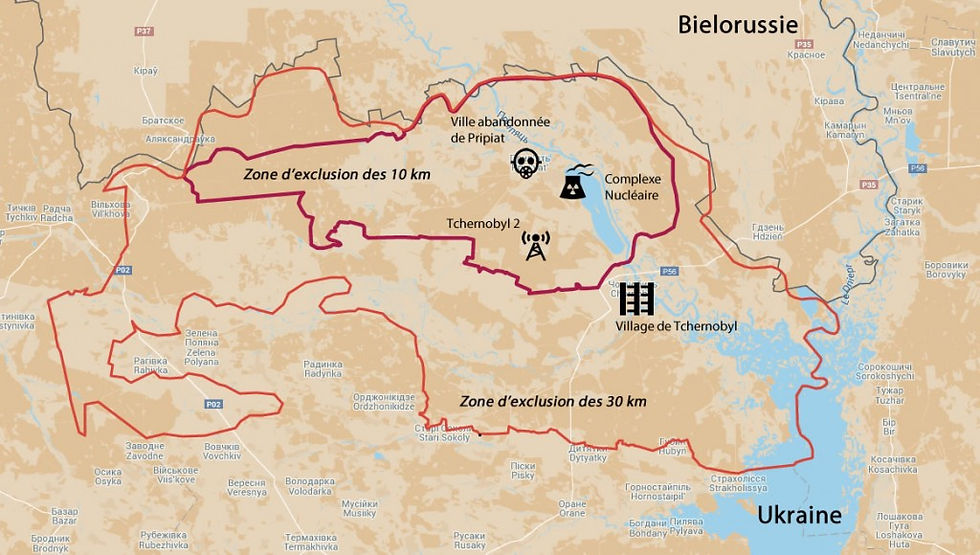
The ghost town of Pripyat remains uninhabited to this day due to the excessive radioactivity in this area (Second exclusion zone, 10 kilometres around the central station).

Nevertheless, the village of Chernobyl is inhabited, in fact many people work in the first exclusion zone which is located 30 kilometres around the central in order to supervise the central and the radioactivity. In this first exclusion zone, radioactivity is as strong as in the city of Kiev and therefore acceptable.
However, workers may be present in this area for a maximum of 15 consecutive days for safety reasons.
It is therefore not uncommon to see inhabitants in the village of Chernobyl, dogs, and even a store!
Here is how exclusion zones are organized
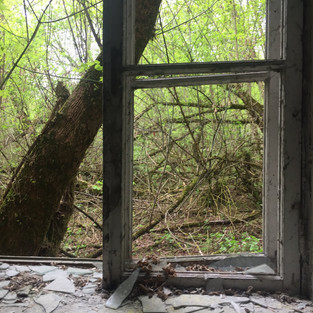
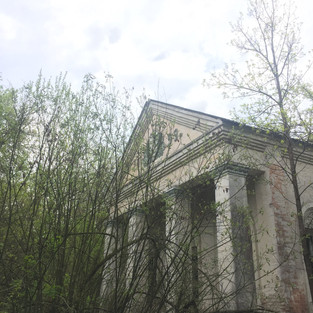
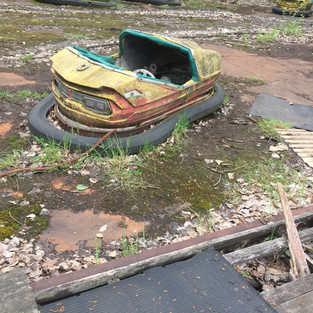
Finally here is some of the pictures I took :










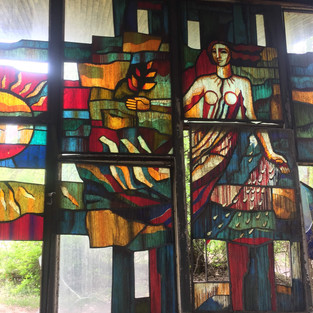


12/06/19


Commentaires